

In Southeast Asia, industrial projects often face challenges such as unstable networks, diverse equipment, and limited on-site support.
This makes system structure more important than individual features.
The following considerations will help you choose a system that works in practice — not just on paper.
1. Define what to measure and why
Start by defining what needs to be measured and how the data will be used.
This includes:
- Energy types (electricity, water, gas, steam)
- Measurement levels (incoming, distribution, equipment)
- Purpose (monitoring, reporting, cost allocation, operational use)
- Scope (single site or multiple locations)
A clear definition at this stage prevents both under-design and unnecessary complexity later.
Not sure what is typically included in a complete system? → Read: What exactly is included in an energy monitoring system?
Explore how these structures are applied→
2. Build a system with one consistent structure
A reliable system requires a consistent structure across devices, communication, and software.
This means:
- Measurement points are clearly defined
- Data follows a unified naming and grouping logic
- The software reflects the actual physical and operational structure
Without this alignment, systems become difficult to maintain and expand.
Wondering if existing meters can be reused?→ Read: Can energy monitoring systems work with existing meters and equipment?
3. Ensure device and protocol compatibility
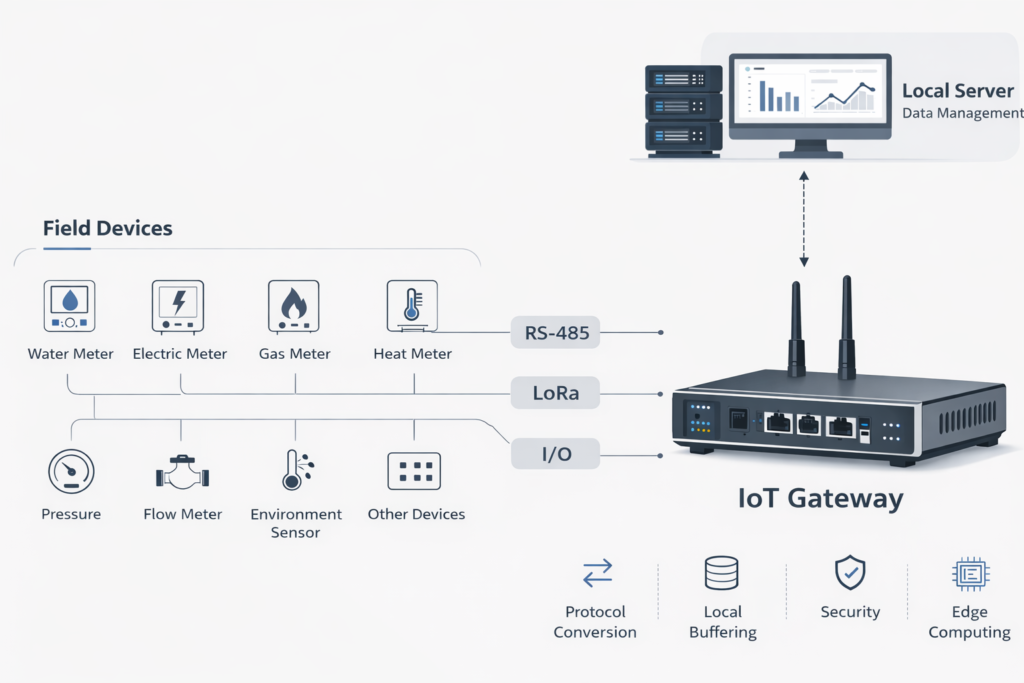
The system should allow different devices and protocols to work together without complex integration.
A well-designed setup:
- Uses standard communication protocols
- Avoids unnecessary data conversion
- Keeps integration simple and stable
This reduces long-term maintenance effort and integration risks.
4. Match the system to real site conditions
The system must match real operating conditions, not ideal assumptions.
In many Southeast Asia projects, this means:
- Unstable network environments
- Limited on-site technical support
- Diverse equipment
A practical system should:
- Operate reliably under these conditions
- Require minimal on-site configuration
- Be easy to understand and maintain

5. Design for scalability
Energy monitoring systems often expand over time.
New equipment, areas, or sites should be added without changing the overall system logic.
A scalable structure ensures:
- New data follows the same rules
- Existing configurations remain consistent
- Expansion does not require system redesign
6. Ensure multi-site consistency
For multi-site projects, maintaining consistent data across locations is critical.
Even when network conditions and equipment vary, the system should:
- Keep data structures consistent
- Allow comparison across sites
- Maintain stable operation without constant intervention
This is often where real differences between solutions become visible.
7. Work with a system-level partner
Choosing the right products is only part of the process.
What matters is how devices, communication, and software are structured into a consistent system.
A system-level approach ensures:
- Components work together from the start
- Data remains clear and usable
- The system can operate and expand reliably over time
Discuss your project →Contact Us