
How to Monitor Energy Consumption
A practical guide to turning scattered energy readings into a system you can actually monitor and use.
Why This Question Comes Up
Monitoring energy consumption sounds simple at first. In many cases, the data already exists somewhere across meters, devices, utility systems, or equipment panels. The real difficulty is that this information is often spread across different points and formats, making it hard to see clearly and even harder to use consistently.
- Total energy use may be visible, but detailed usage is not.
- Data may exist across different systems, but not in one clear view.
- Monitoring often depends on manual effort instead of a workable process.
Why It Becomes Difficult
The challenge is usually not the lack of readings. It is the lack of structure behind them. When energy data is not collected, organized, and displayed in a consistent way, monitoring becomes fragmented and difficult to sustain.
Data Is Scattered
Energy readings may come from different meters, systems, or interfaces, which makes overall consumption harder to follow.
Data Is Not Structured
Even when data is available, it may not be organized by area, function, system, or time in a way that supports real analysis.
Data Is Hard to Use
Without a clear structure, reporting, comparison, and follow-up remain manual, slow, and difficult to maintain over time.
Why Common Approaches Fall Short
Many sites begin with practical short-term methods. These may help at the beginning, but they rarely create a monitoring process that remains clear and usable as the site grows.
Manual Meter Reading
Useful for occasional checks, but difficult to maintain for continuous monitoring or timely follow-up.
Spreadsheet Tracking
Can collect records, but usually depends on repeated manual updates and offers limited real-time visibility.
Isolated Device Interfaces
Individual devices may show local data, but not in a way that creates one connected view across the site.
What Actually Makes Monitoring Work
To monitor energy consumption effectively, the key is not only to collect data. The key is to build a structure that makes the data visible, organized, and usable over time. This is the turning point between having readings and having a system.
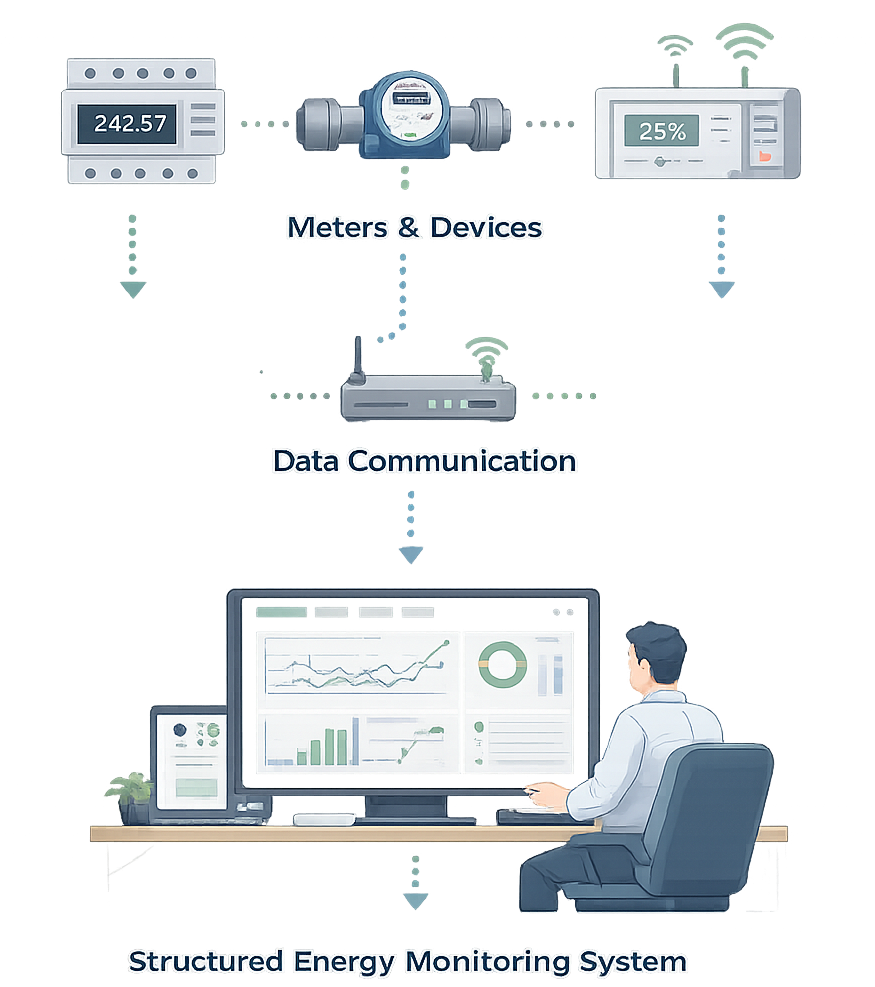
A workable approach needs energy data to move through a clear path: from field measurement, to stable communication, to software that supports monitoring, analysis, and reporting. Once this structure is in place, energy monitoring becomes easier to carry out in daily management rather than only during occasional reviews.
Step 1: Capture Data
Collect readings from meters, devices, and utility points in a consistent way.
Step 2: Structure Data
Organize data by area, system, use type, or time so it can be compared and followed.
Step 3: Use Data
Turn energy data into visibility, reports, and actionable follow-up for ongoing management.
Why a Structured Energy Monitoring System Matters
This is where an Energy Monitoring System becomes important. It provides the structure needed to connect meters, communication, and software into one workable framework, so energy data can be monitored and used more consistently across the site.
Instead of leaving readings separated across different devices or local interfaces, the system helps create a clearer foundation for visibility, reporting, comparison, and follow-up. This makes energy monitoring more practical not only for current needs, but also for future expansion.
Devices Layer
Meters and field devices collect energy data from the site.
Communication Layer
Gateways and communication links move data into a stable and usable flow.
Software Layer
The platform turns raw readings into monitoring views, analysis, and reports.
Ready to Monitor Energy Consumption in a More Structured Way?
Help Center
Check here to contact us directly.