
How to Reduce Energy Cost with Energy Monitoring
Reducing energy cost starts with making energy use visible, comparable, and manageable over time.
Why This Question Comes Up
Reducing energy cost is a common goal, but identifying where the cost is really coming from is often much harder. Utility bills show the result, but they do not show enough of the operating picture behind it.
In many sites, the question is not whether energy use is high. The question is where the main usage is concentrated, which patterns are changing, and which parts of the site should be reviewed first.
- Total cost may be visible, but the usage structure behind it is not.
- High consumption can be seen, but not easily traced by area, system, or time.
- Cost reduction efforts often begin before the data is clear enough to support decisions.
Why Reducing Energy Cost Becomes Difficult in Practice
Energy cost is rarely reduced by total figures alone. It requires a clearer view of where energy is being used, how usage changes over time, and which areas or systems deserve attention first. Without that structure, cost reduction becomes difficult to prioritize and even harder to verify.
Cost Is Visible, Causes Are Not
Bills and totals show the outcome, but not enough detail about what is driving consumption across the site.
Usage Is Hard to Compare
When data is not organized by area, function, or system, it becomes difficult to identify where meaningful differences exist.
Action Is Hard to Prioritize
Without a clear data basis, teams may know improvement is needed without knowing which action should come first.
Why General Energy-Saving Actions Often Fall Short
Sites often try to reduce cost through operating changes, scheduling adjustments, or basic management actions. These may help in some cases, but without a clear data structure, it is difficult to know where the main opportunities are or whether the changes are producing measurable results.
Actions Start Too Broad
Without enough usage detail, cost reduction efforts often begin at a general level instead of focusing on the most relevant areas.
Results Are Hard to Verify
When monitoring remains limited, it becomes difficult to compare before and after conditions with confidence.
Follow-Up Becomes Inconsistent
If cost reduction depends on manual checks or occasional reviews, progress is harder to sustain over time.
What Actually Creates a Clearer Path to Cost Reduction
To reduce energy cost in a practical and repeatable way, the first step is not only to cut usage. The first step is to make energy use visible in a structure that supports comparison, analysis, and follow-up.
Once energy data can be organized by area, system, or use type, it becomes easier to identify where cost is concentrated, which patterns are changing, and which actions deserve priority. This is the point where cost reduction moves from assumption to management.
Step 1: See Where Energy Is Used
Create visibility into how consumption is distributed across the site.
Step 2: Compare What Changes
Track differences across time periods, systems, or operating areas.
Step 3: Act with Better Priority
Use clearer data to focus attention, follow results, and improve continuously.
Why a Structured Energy Monitoring System Matters
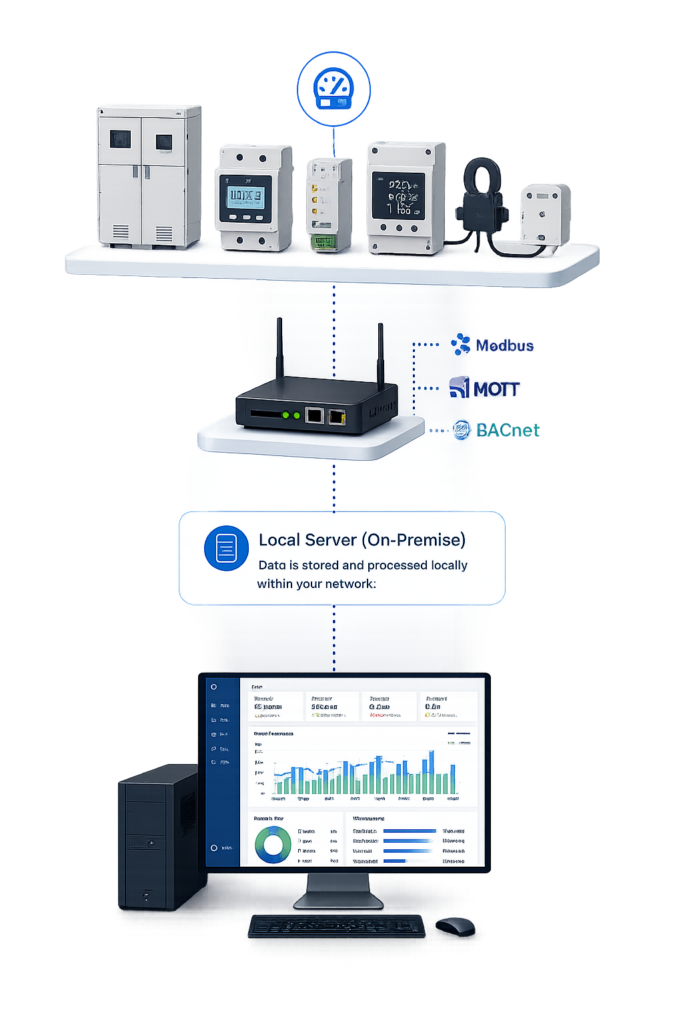
This is where an Energy Monitoring System becomes important. It provides a clearer framework for collecting, organizing, and using energy data, so cost reduction can be supported by actual usage visibility rather than by general assumptions.
Instead of relying only on total bills or isolated readings, the system helps create a more usable basis for comparison, reporting, and ongoing follow-up. This makes it easier to understand which areas, systems, or usage patterns are driving cost and where improvement efforts can be better directed.
Where more detailed consumption breakdown is needed, a Sub-Metering System can help separate usage by tenant, department, floor, or function. Where electrical behavior has a stronger impact on cost or operation, a Power Monitoring System can provide closer visibility into electrical conditions and abnormal events.
Devices Layer
Meters and field devices collect energy data from the site.
Communication Layer
Gateways and communication links move data into a stable and usable flow.
Software Layer
The platform turns raw readings into monitoring views, analysis, and reports.
Ready to Reduce Energy Cost with a More Structured Approach?
Help Center
Check here to contact us directly.