• From rough to refined energy management
• Transparent and allocable energy costs
• 20%+ reduction in after-hours energy consumption
• Sustainable energy management framework established


• From rough to refined energy management
• Transparent and allocable energy costs
• 20%+ reduction in after-hours energy consumption
• Sustainable energy management framework established
| Project Name | Huayu Automotive R&D Center |
| Location | Zhangjiang Hi-Tech Park, Pudong, Shanghai, China |
| Industry | Automotive Office & R&D Facility |
| Building Scale | 3 main buildings with podium, total floor area of approx. 100,000 m² |
| System Type | Building-level Energy Monitoring System |
| Deployment | On-premise deployment |
| Device Scale | Approx. 220 smart meters and 8 ultrasonic energy meters |
| Data Acquisition | 5 data collectors and 1 power monitoring control cabinet |
| System Functions | Real-time energy monitoring, sub-metering, power monitoring, energy analysis, and reporting |
 Lack of Sub-metering for Major Energy Loads
The primary energy consumption in the R&D center comes from HVAC systems, data centers, and laboratory equipment. However, energy usage is currently monitored only at the main meter level, with no sub-metering for key equipment. As a result, it is difficult to identify high-energy-consuming sources when costs increase, limiting effective energy cost control.
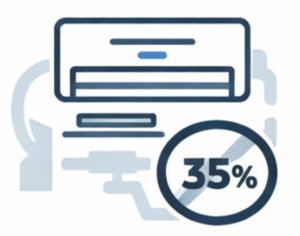 HVAC Energy Cannot Be Allocated
HVAC accounts for over 35% of total building energy consumption during peak seasons. Due to the lack of thermal energy and zone-level metering, energy usage cannot be allocated across different departments or tenants, leading to challenges in internal cost sharing and weak incentives for energy saving.
 Energy Waste Due to Manual Control
Lighting, air conditioning, and water usage are largely managed manually, resulting in frequent cases of equipment running without occupancy. Without data tracking or monitoring, energy waste cannot be effectively identified or controlled.
 Lack of Energy Management Dashboard
Energy data is scattered across different systems, with no unified platform for centralized monitoring and analysis. Management lacks visibility into energy trends and performance, making it difficult to develop data-driven energy management strategies.
A complete on-site energy monitoring system was deployed, covering data collection, transmission, and multi-level energy measurement across the entire building.
| Layer | Device Type | Function Description |
| Platform Layer | Local Server | Deploys the local energy management system, supporting data storage and visualization analysis |
| Acquisition Layer | Data Collector | Collects data from various meters and energy devices, enabling unified data integration |
| Acquisition Layer | Power Monitoring Control Cabinet | Centralized management of power monitoring circuits and communication |
| Metering Layer | Single-phase Smart Meter | Measurement of office and lighting circuits |
| Metering Layer | Three-phase Smart Meter | Measurement of power and distribution systems |
| Metering Layer | Multi-function Meter | Monitoring of key equipment and critical circuits |
| Metering Layer | Ultrasonic Energy Meter | Measurement of heating and cooling energy for central air-conditioning systems |
Energy data is transformed from total-level monitoring to device-, zone-, and department-level visibility.
Thermal energy is measured and allocated based on actual usage across departments.
Energy cost is linked to departments, combined with after-hours monitoring.
Organization-wide energy management
20%+ reduction in after-hours energy use
Long-term energy-saving culture
The physical devices responsible for data measurement, collection, and transmission.
Tell us your application scenario and we’ll recommend the most suitable use case and product set for fast, seamless deployment.

We are here to help, tell us a bit about your project.