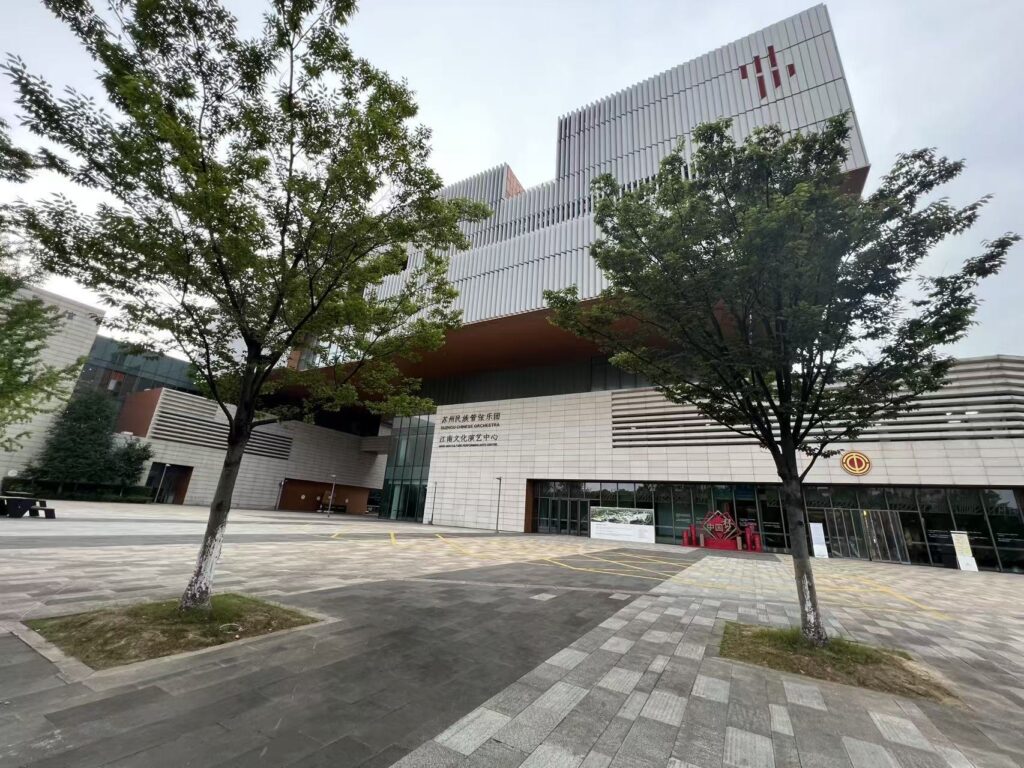
Full Energy Visibility and Smart HVAC Control for a Large-scale Cultural and Commercial Complex

A building-level energy monitoring system deployed across a multi-functional cultural and commercial complex, enabling sub-metering, environmental monitoring, and smart HVAC control for improved energy visibility and operational efficiency.

Project Key Result

• Full energy visibility achieved across multiple venues and shared areas

• Accurate energy allocation for tenants and public facilities

• Significant reduction in manual meter reading workload

• Improved indoor comfort through real-time environmental monitoring

• Reduced HVAC energy consumption in public areas

• Remote control enabled for public area air conditioning systems

• Enhanced data visibility for management decision-making

Project Overview

Project Suzhou High-tech Culture and Sports Center
Location Suzhou High-tech Zone, Suzhou, China
Application Mixed-use complex (Office, Commercial, and Public Facilities)
Facility Overview Approx. 170,000 m², comprising six major facilities: Culture Center, Library, Sports Center, Public Fitness Center, Film Center, and Commercial Center
System Scope Building-level energy monitoring system with integrated HVAC and environmental monitoring
Deployment On-premise architecture with local data processing and storage
Field Devices • 355 smart electricity meters
• 4 smart water meters
• 5 electromagnetic energy meters
• 168 HVAC thermostats
• 82 temperature & humidity sensors
Data Acquisition 20 data collectors for unified device integration
Core Functions Real-time energy monitoring, building energy analysis, automated reporting, HVAC control, and environmental condition monitoring

Customer Challenge

Difficult Energy Data Collection and Cost Allocation
  • The complex consists of multiple independently operated facilities, while shared energy consumption (lighting, hot water, HVAC) in public areas cannot be accurately allocated. Energy data collection relies heavily on manual meter reading and analysis, resulting in low efficiency and limited accuracy.
Imbalanced Cooling and Heating in HVAC System
  • The HVAC system lacks precise control of cooling and heating output, leading to over-supply in some areas (e.g., library) and under-supply in others (e.g., office spaces), resulting in inconsistent indoor comfort.
No Remote Control for Public Area HVAC
  • Air conditioning terminals in public areas such as corridors and restrooms cannot be remotely controlled. Manual operation is time-consuming and often delayed, causing unnecessary energy consumption.
Lack of a Unified Energy Data Platform
  • Energy data is fragmented across different systems with no centralized platform. Management lacks visibility into energy trends and performance, making it difficult to evaluate efficiency improvements and support data-driven decisions.

What We Implemented

Sub-metering System for Multi-Zone Energy Allocation
  • A sub-metering system is deployed across each venue, tenant distribution circuits, and key equipment, enabling accurate energy measurement and allocation. This improves energy management capabilities and supports fair cost distribution across different operational units.
Indoor Environmental Monitoring Across Facilities
  • Temperature and humidity sensors are installed across venues and office areas to continuously monitor indoor environmental conditions, providing reliable data to support comfort management and system optimization.
Smart Control Upgrade for Public Area HVAC
  • Conventional HVAC control panels in public corridors and restrooms are upgraded to intelligent control panels, enabling centralized and efficient control of air conditioning systems and reducing manual operation.

System Architecture

A unified three-layer architecture enabling reliable data acquisition, system integration, and intelligent energy management across complex multi-zone facilities.

Platform Layer – System Hosting & Data Management
  • Hosts the energy management system, enabling centralized data storage, visualization, and analysis.
Acquisition Layer – Data Integration & Communication
  • Collects and aggregates data from field devices, ensuring reliable and unified system access.
Measurement Layer – Field Devices & System Monitoring
  • Measures energy consumption, water usage, and environmental conditions, supporting monitoring and control across all facilities.


Layer Device Type Description Quantity
Platform Layer Local Server Hosts the on-premise energy management system, supporting data storage and visualization 1
Acquisition Layer Data Collectors Collect data from meters and energy devices, enabling unified system integration 20
Measurement Layer Three-phase Smart Energy Meters Monitor key equipment and critical power distribution circuits 355
Measurement Layer Electromagnetic Flow Meters Measure chilled and hot water energy consumption in HVAC systems 5
Measurement Layer Smart Water Meters Measure water consumption 4
Measurement Layer Environmental Sensors Monitor temperature and humidity conditions across facilities 82
Measurement Layer Smart HVAC Thermostats Enable temperature control and HVAC operation management 168

Result


Full Energy Visibility with Sub-metering

How it works
  • A sub-metering system is deployed across multiple venues, tenant distribution circuits, and key equipment, including smart electricity meters, water meters, and electromagnetic energy meters. This enables real-time data collection and eliminates reliance on manual meter reading.
What you get
  • Fair and transparent energy cost allocation across venues and tenants
  • Reduced manual meter reading workload
  • Visualized energy data, including trends and consumption ranking by facility
  • Data becomes traceable, comparable, and analyzable


Improved Indoor Comfort with Environmental Monitoring

How it works
  • Temperature and humidity sensors are deployed across venues to continuously monitor indoor conditions. The system provides full visibility of the thermal environment, supporting HVAC system adjustment and optimization.
What you get
  • Improved indoor comfort and user experience
  • Reduced unnecessary HVAC energy consumption
  • Fewer complaints from occupants


Smart HVAC Control for Public Areas

How it works
  • Conventional HVAC control panels in public corridors and restrooms are upgraded to smart control panels, enabling remote start/stop and temperature control based on usage conditions and external environment.
What you get
  • Reduced manual operation and inspection workload
  • Lower energy consumption in public areas
  • Improved operational efficiency and user experience


Share your requirements

Share your current requirements — we’ll review them and come back with a structured and practical response.

Confident businesswoman using her tablet and phone, smiling outdoors in sunlight.

Tell us your requirements.

We’ll recommend the right monitoring solution.